Prices subject to change without notice
*Price includes U. S. customs duty, processing fees, currency-conversion fees, and shipping & insurance from the manufacturer to our office in the USA
*UPS Ground insured within the contiguous 48 states. We combine shipping with multiple items, offer expedited shipping, and ship to other locales inside or outside the USA. Please see full shipping options, terms & conditions.
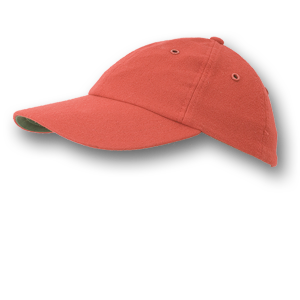
USAAF WWII Red Ball Cap, Subdued Wash
USAAF WWII Red Ball Cap, Subdued Wash
Prices subject to change without notice
*Price includes
U. S. customs duty,
processing fees, currency-
conversion fees and
shipping & insurance from
the manufacturer to the USA.
*UPS Ground insured within the contiguous 48 states. We combine shipping with multiple items, offer expedited shipping, and ship to other locales inside or outside the USA. Please see full shipping options, terms & conditions.
- Product Information
- Sizing Tips
- Measuring Garments
- Body Measuring
- Product Information
Ball caps were very popular with the USAAF pilots of WWII. Archive photo evidence shows they were particularly popular amongst the fighter pilots in the Pacific theater, and we happened to obtain an original vintage example that belonged to a fighter pilot of the 39th Ftr. Sq. that is red in color, though not all of these caps were red; it’s quite possible that the caps were color coded to match the squadron colors, as the 39th colors were red.
No authentic detail has been over looked, which includes making sure the original form-fitting skull shape is retained. No components of this cap exist today, so every piece of our cap, from cloth to hardware, was custom made to our exacting specifications. The cap is produced from a lightweight, worsted-wool flannel in Grenadier Red with the crown having the correct six-piece construction, which helps tailor the shape to a close form-hugging fit. Please note these other authentic details found only on a true vintage cap of the 1940s that clearly distinguish our copy from any contemporary ball cap on the market:
•Custom-made, high-quality all-wool flannel fabric dyed a subdued-wash red
•Six-piece crown with cloth-covered center button
•Horsehide leather sweatband zigzag stitched to cap, exactly as found on vintage examples
•Custom-made cotton fabric that backs the under side of the visor
•Reinforced inside seams with black all-cotton tape
•Hessian fabric employed as a backing to maintain shape of the two front panels, exactly as found on vintage examples
•Four rows of reinforcing stitching on the visor, exactly as found on vintage examples
•Metal ventilation grommets painted red, exactly as found on vintage examples
Available in sizes 7 – 7 1/2. Please see our SIZING TIPS for advice on how to get the correct fit.
Imported from England
- Sizing Tips
SIZING TIPS
About this Style:
These caps are available in sizes 7, 7 1/8, 7 ¼, 7 3/8, & 7 ½. The fit runs true to your measured head size as converted to a cap size.
Tip 1: Measure your head circumference following the instructions found under the tab BODY MEASURING on this web site.
Tip 2: Covert your head measure to a cap size as found on the above-referenced tab link on this web site.
Tip 3: Order your corresponding cap size as converted from the head-measuring exercise found on this web site. For example: If your head measures 22 ¾”, which converts to size 7 ¼, order size 7 ¼. If you measure in between sizes, we suggest always rounding your head measure up to the larger size, but only you can determine this subjective area of fit.
If you are unsure of the size to order we will assist you; please contact us with your head measure as derived from the instructions and diagram found under the tab for BODY MEASURING on this web site.
- Measuring Garments
MEASURING GARMENTS
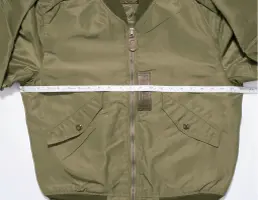
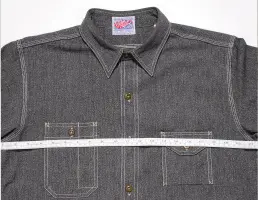
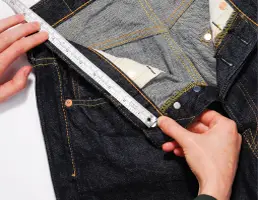
This section will explain and illustrate the measuring techniques we employed to derive the garment measurements found under the PRODUCT MEASUREMENTS tabs related to each of our products; additionally, this section provides the educational tools to enable the accurate measuring of any garments you may have access to for comparison. Garment measurements are invaluable when used in conjunction with the instructions found under the tab BODY MEASURING, as well requisite for following our advice found under the tab SIZING TIPS.
Please click on the appropriate link below that relates to the product category for which you wish to ascertain garment-measuring instructions:
- Body Measuring
BODY MEASURING
Measuring for Jackets and Shirts
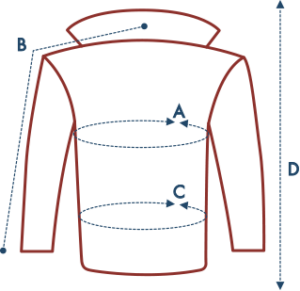 Please take these measures wearing just a thin shirt or undershirt or with no shirt at all. Simply note the following measures on a sheet of paper so you can comapre your findings to our listed measurements found under the PRODUCT MEASUREMENTS tab or so you can request assistance from us. Please always refer to the information found under the SIZING TIPS tab that is specific to each product.
A) CHEST—Measure high under armpits, spanning the widest part of your chest, then wrap tape around for one 360-degree complete circumference measurement.
B) SLEEVE – Measure from the nape of the neck to the shoulder edge, then down the arm to the bottom of the wrist bone.
C) WAIST – Measure the widest part of your waistline for a complete 360-degree circumference measurement.
D) HEIGHT – Your total overall height
E) BODY WEIGHT – Your total body weight
A Good Jacket Fit
There is no industry standard for grading size: Any jacket we offer in, say, size 42, may very well not be the same measure as another jacket of the exact same size made by a different company, or even if made by the same company. Ultimately, chest measure is the most important area to properly fit, then all other areas of measure will have to fall into place. And some individuals who are extremely tall may find that body and/or sleeve length are more important to accommodate than even chest measure.
Do NOT attempt to guess your size in our jackets, and please understand that no jacket can be two jackets in one (you may have to make a compromise in fit somewhere). The best look is achieved wearing a shirt and undershirt, or a medium-weight sweater with undershirt; the goal being a trim, sleek look. If the application of our jackets is with multiple layers of clothing, then the original look will be compromised. When purchased oversized, please keep in mind that the jacket will fit NOT trimly but LOOSELY when fewer clothes are worn.
It is best to compare your actual body measures to the measurements of one of our products found under the tab
PRODUCT MEASUREMENTS, then follow our sizing pointers found under the tab SIZING TIPS, which are specific to each product. And never be reluctant to ask us for sizing advice; we’re here to help you get the best fit possible!As a rule here, if the jacket squares up nicely on the shoulders when worn with the sort of clothing you will wear most of the time, falls about 1 1/2″ below the top of your trousers (if a waist-length jacket), allows you to reach into trouser pockets and recover keys, wallet and change without discomfort or pain, as well as allow normal strides while walking, then this is very likely a good fit and how the jacket would have been worn when originally issued.
Using the good-fit test where one draws their arms across their chest as a barometer for snugness will almost certainly produce some binding in an A-2 jacket of the correct size, and thus push you further up the sizing scale into a very large A-2 jacket. A true 1940s A-2 jacket has no bi-swing action back (as found on the USN M-422A or G-1jackets, USAAF B-6, Tanker jacket, etc.) and is not cut for such a great range of movement as experienced when doing the arm-crossing act. If you can get that sort of movement range without binding in one of our A-2s, then it will surely be rather loose and sloppy when you aren’t drawing your arms across your chest in front of you.
What makes more sense, having a jacket that looks great and feels fine during 90% of your activities, or only when you cross your arms in front of you? Do you walk around with your arms crossed in front of you? The choice is yours and we will gladly oblige all tastes, but do try to get the look originally intended.
Measuring for Caps
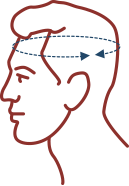 Caps – Measure the circumference around the widest portion of the head just above the ears and brow where the cap will sit. The number you derive from this exercise must be converted to a numerical cap size. Please use the chart below to convert your head circumference measure to a numerical cap size, which will then enable you to following the SIZING TIPS for our caps to place and order.
If you need any assistance, please contact us.
Head Circumference Inches Head Circumference Centimeters Hat Size 22″ 56 cm 7 22 3/8″ 57 cm 7 1/8 22 3/4″ 58 cm 7 1/4 23 1/8″ 59 cm 7 3/8 23 1/2″ 60 cm 7 1/2 Measuring for Gloves
 Gloves – Measure the circumference around the widest portion of the knuckles (excluding thumb) while holding your hand flat. The number you derive, say, 9”, is your numerical glove size. With select glove styles on this web site we ask you to provide us with this number derived from measuring your hand knuckle circumference, then we’ll make the correct size selection for you in conjunction with your input. Where we request this information, please provide the true number even if your hand measure falls between numbers, say, 9 ¼”; you’ll be able to add a memo to your order in the checkout process informing us as to the details of your hand measure and we’ll intereact with you to determine if rounding this number up is the best choice. Always follow the SIZING TIPS for each product to determine what you need to know for ordering.
If you need any assistance, please contact us.
Measuring for Jeans and Trousers
A) WAIST – Using a tape measure, measure the full circumference in a 360-degree circle around your waistline where you plan to you’re your jeans or trousers (if you have a large mid-section but plan to wear the jeans or trousers below your belly, then measure the area where you will wear the jeans or trousers). It is sometimes better to measure the widest portion of your waistline regardless of where you actually where your jeans or trousers, which is the case when measuring yourself for a jacket or shirt. Always follow the SIZING TIPS for each product to determine where it is best that you should measure.
B) INSEAM – While wearing the footwear you normally would have on with the jeans or trousers you plan to order, measure your inseam length with a measuring tape beginning at the highest point of either inside leg up in the crotch area and measure down the inside leg to where you want the trousers or jeans to end; the measure you derive is your inseam length. This measuring exercise is best performed by another individual while you are standing upright with you legs straight. You may compare your inseam length to the PRODUCT MEASUREMNTS specific for each product found under the tab of this same name or on the PRODUCT INFORMATION tab.
You may also want to compare other areas of fit for each product, such as front rise or thigh width, which are found under the PRODUCT MEASUREMNTS tab specific to each product.
If you need any assistance, please contact us.
* Prices subject to change without notice.
* Ground insured within the contiguous 48 states. We combine shipping with multiple items, offer expedited shipping, and ship to other locales inside or outside the USA. Please see full shipping options, terms & conditions. Please see full shipping options, terms & conditions.